Perception: Roma passively accept economic and social inequality. They do not attempt to help themselves or improve their own situations.
Reality: The inequality, poverty and social exclusion Roma have experienced has made many believe that they will never be equal to non-Roma majorities. This belief is encouraged by government authorities who fail to adequately recognize and respond to violence against Roma. Furthermore, urgent needs such as securing food and shelter can make it difficult to prioritize long-term needs and future aspirations.
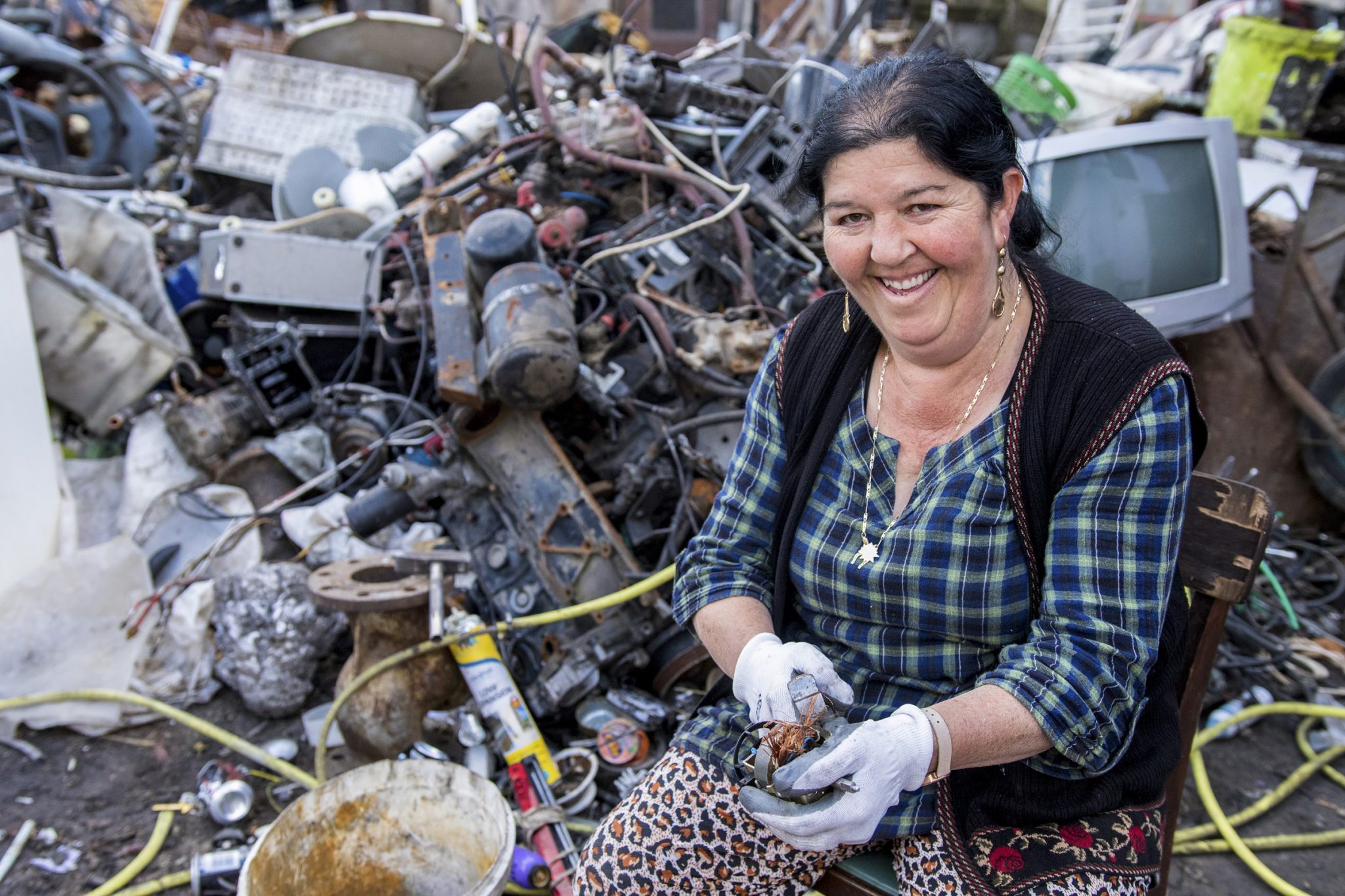
Behara Tahirović (56),
Business Owner
“I am a woman who has owned my own company for eight years. I did not want to sit at home and feel helpless, so I just started to go out with my kids and collect iron. It was difficult at the beginning. However, after some time I got myself organized, found buyers, and set up transport. My daughter, my son-in-law and their children help me collect the iron. They have also found me buyers in Zenica. This is not a dream job, but it has enabled me to find my place in the world and to fight for the future of my family. My husband was not able to work. He lost his hearing long ago, and I became responsible for everything. I think this has made me strong. The fact that I am able to own a business has shown my daughter and other women that they can succeed and that women in society are just as capable of earning a living as men are, and this is something that is very important to me. I also want to show people that we (Roma) are not all thieves, criminals, and prostitutes. I always tell my daughter how important it is to work hard and be persistent.”