Perception: Roma are lazy, unskilled workers and the products of their craftsmanship are of low quality. They practice outdated trades and remain unwilling to integrate into the mainstream job market.
Reality: Craftsmanship has been a time-honored tradition within the Roma community with many Roma surnames representing trades such as woodworking and blacksmithing. Today, craftsmanship continues to be practiced, though it is often in a more modern fashion. Many Roma adjust their traditional skill sets to meet the competitive market demand. Blacksmiths, for example, have adapted to making contemporary furniture. However, institutional and societal discrimination against Roma within the marketplace can create barriers to entry.
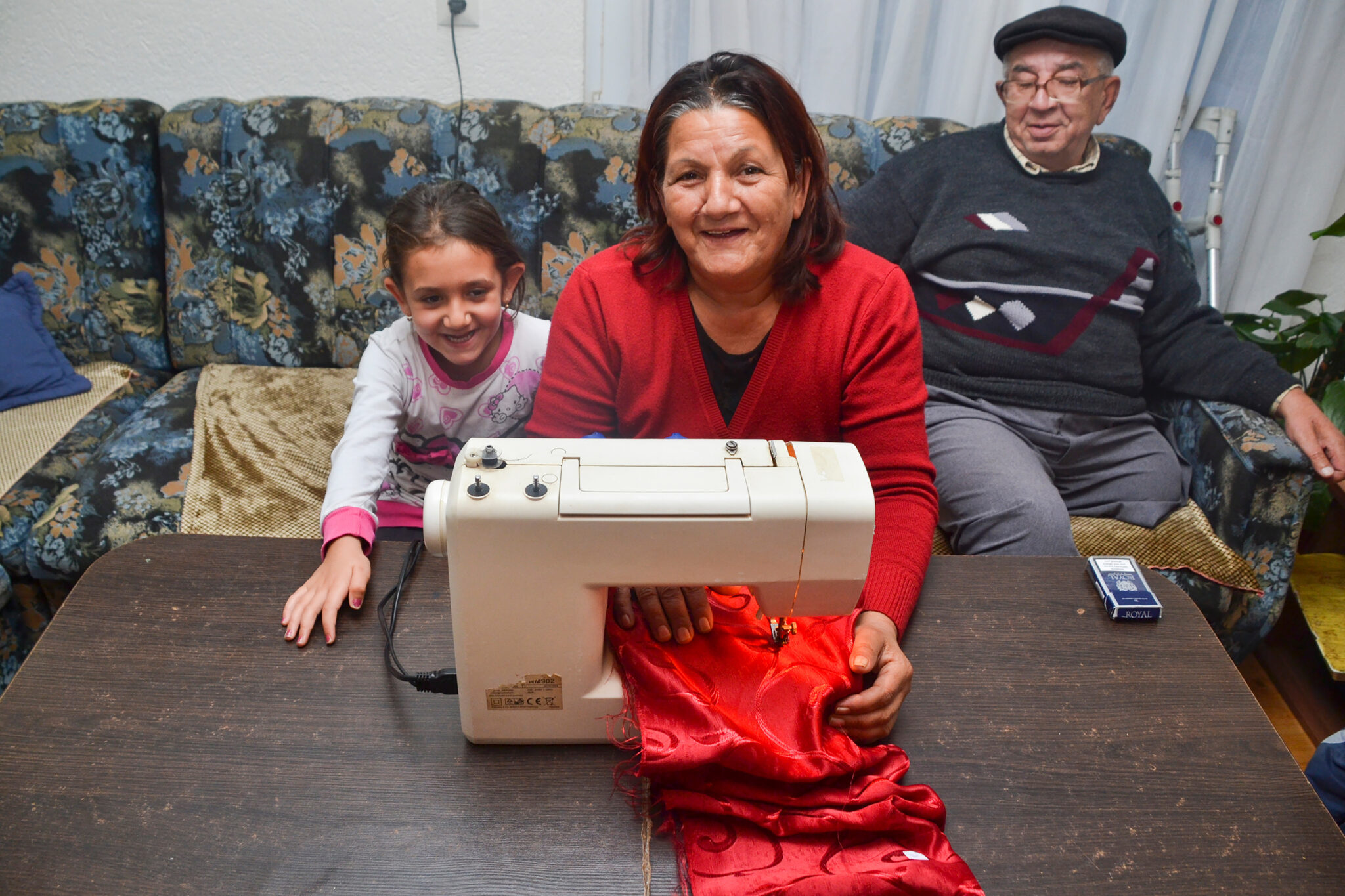
Zijada Fafulović (56),
Seamstress
“I consider myself a housewife, mother, and wife. I have four children, two boys and two girls, and 15 grandchildren. I didn’t go to school so I couldn’t get a job. At the time when I was supposed to be getting an education, it was not the tradition to send female children to school, whether they were Roma or not. My parents decided that my sisters and I didn’t need to get an education. I wasn’t happy that they chose not to send us to school, but we had to respect our elders. Life is hard and you must work and fight. I always loved to work with my hands and I was never the kind of woman who only wanted to clean, cook, and be with the children—although I do love to cook and can make the best potato pie. I would get antsy if I was just sitting around, so I learned how to sew. It started as a hobby, a useful way to make things for my family and myself and to fix and patch things around the house like curtains and bed linens. Then, when I realized I was really good at it, I joined the Roma Women’s Association where I worked for two years making bedding and pillows. Now, I teach my grandchildren how to sew and my granddaughter Ilda is the most interested. She sits beside me, watches me sew, and always tells me: ‘I want to be just like you so I can make my own dresses.’ So, I show and teach her. I tell her that it’s important to know and learn the craft so she is able to make something nice for herself and stand out from the others. It brings me a lot of joy that my grandchildren want to learn to sew. My wish is to get the opportunity to transfer my knowledge to the youngsters that want to learn this craft because every trade is worth gold in time. I would love to teach them how to sew bedding and curtains. Then I’m sure they could start their own private business.”