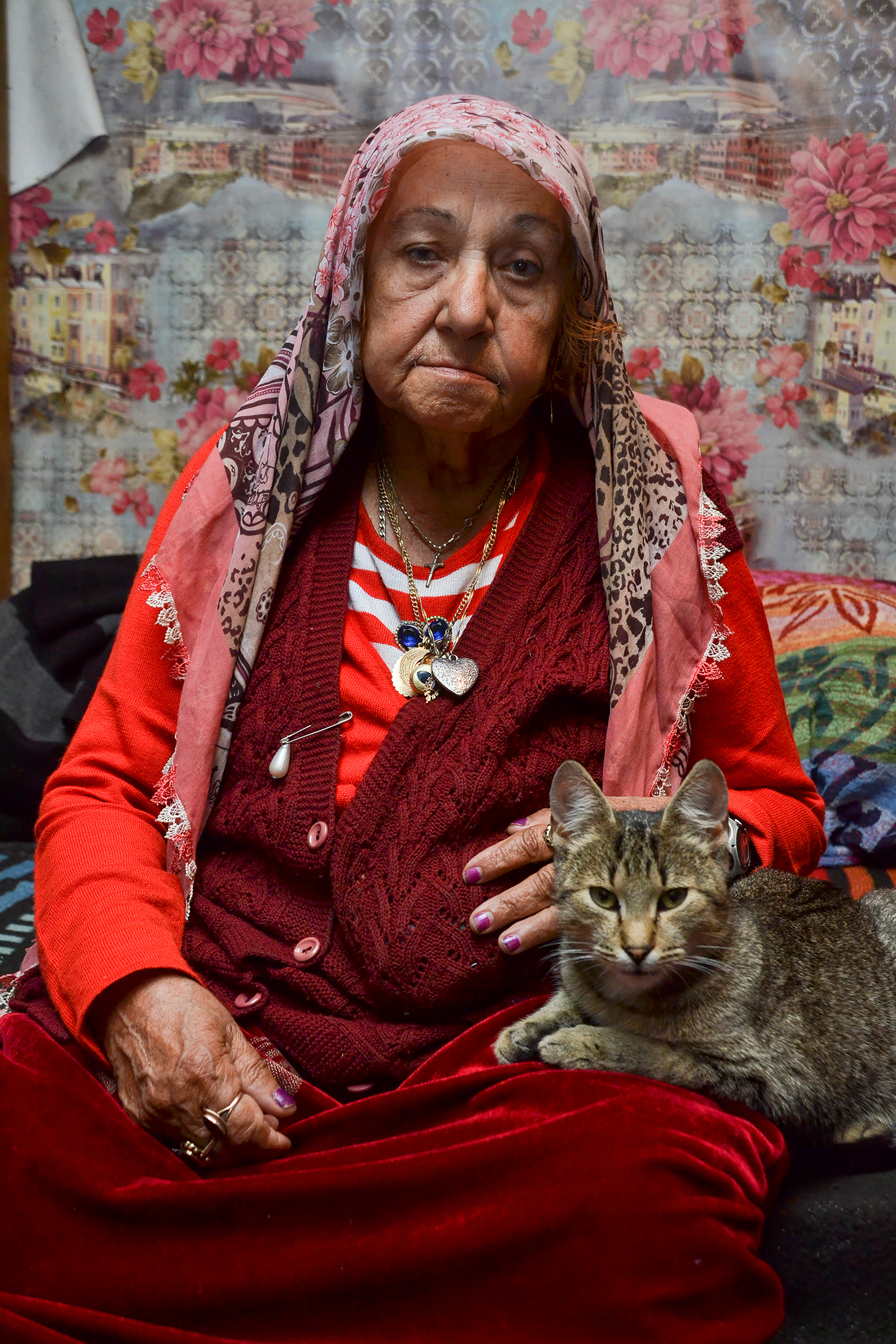
Perception: Roma are carefree nomads who live in tents and caravans, devoid of any real connection to the communities in which they live. Their nomadic lifestyle allows them to disregard social norms and mores and to avoid long-term responsibility and accountability.
Reality: In previous centuries, nomadism was almost never a matter of free choice but of persecution with continuous expulsion recurring throughout Roma history. Today, only 20% of European Roma are still nomadic. When not met with violence and forced displacement, Roma communities often build stable and permanent settlements.
Bisera Musić Ferhatović (82),
Oldest Woman in Her Village
“I have lived here forever. My ancestors have always been here. We never wandered around the world camping in tents. I’m the only Roma woman left in the village who is fluent in the Romani language and to this day, when sitting next to the bonfire in the summer, I make sure to tell the children stories in our language. I am always happy to see that young Roma people enjoy hearing me speak Romani. I try to teach them some words to remember, to know their language and their roots. Teaching them can be a challenge, though, because children in the village do not learn the Romani language in school. It is difficult to remember a language that you don’t use in your everyday life. I earned my pension by working for the Communal Company here in Vitez. Sometimes it wasn’t easy and I often received insults from people while I was cleaning the streets. But I never paid much attention to what people were saying. I just continued to do my job professionally. I never wanted to feel different. I believe we are all equal people, created of flesh and blood by God.”