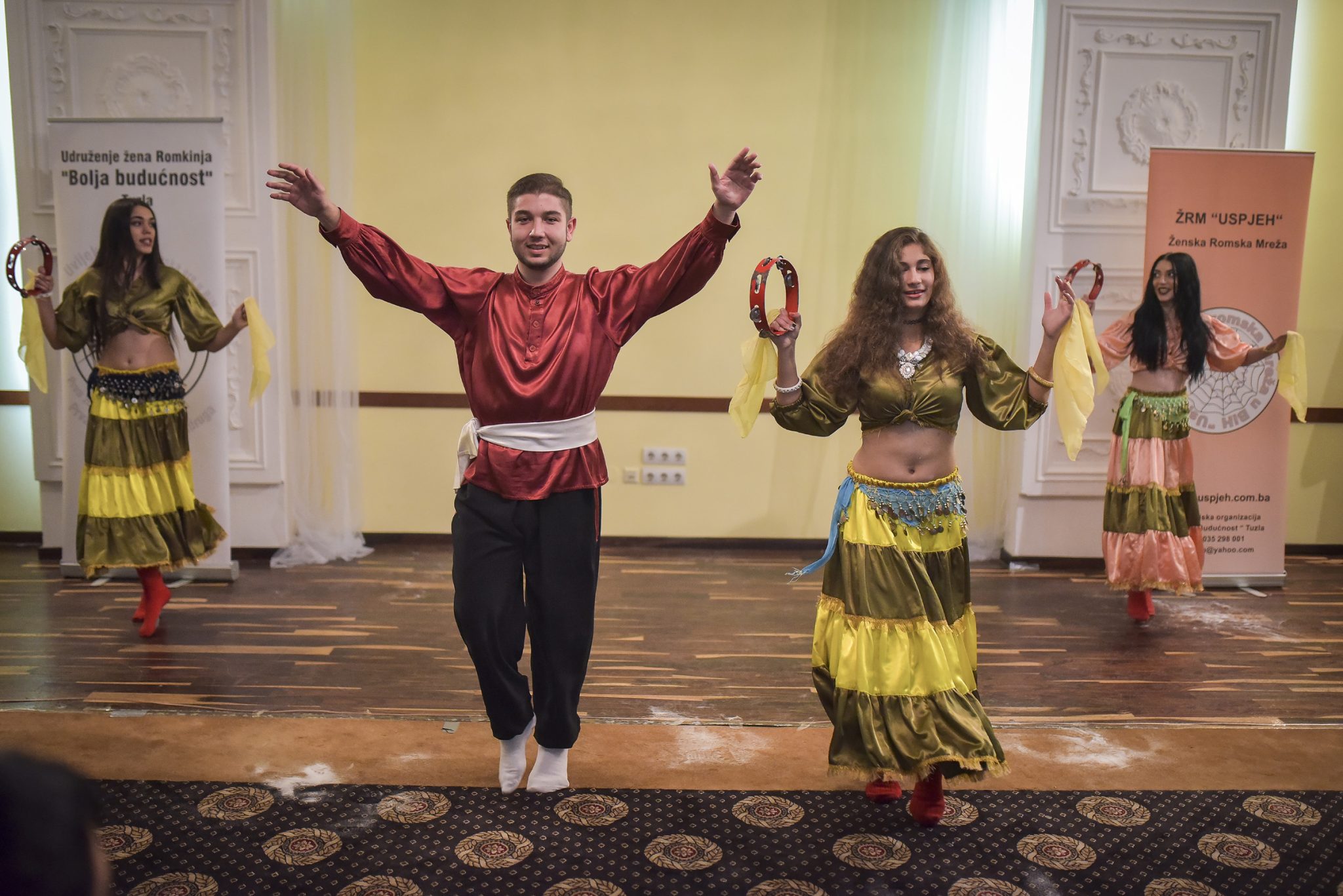
Perception: Roma customs and traditions have remained unchanged for centuries. These customs are backward and incompatible with modern day life.
Reality: Roma highly value individualism and free choice. Their customs and traditions have evolved over time and are often a combination of elements from their own unique cultural heritage and practices from their countries of origin. As is the case in the vast majority of cultures around the world, Roma customs often revolve around important life events such as birth, marriage, and death.
Adil Fafulović (53),
Chef, Street Cleaner, Dance and Song Instructor, and Founder of the Vitez Cultural Arts Society for Roma
“I graduated from the high school for culinary training in Travnik. As soon as I graduated, I got an internship in Vitez where I started working on assignment as a chef. I think I was a valuable worker, but also a good chef, because I immediately got a job right after the internship ended. I worked for that company when the war began in 1992. After the war, I wasn’t able to get the same kind of work, so I started working as a street cleaner for the public utility company Vitkom Vitez. The life of a Roma person is not easy. There is a lot of prejudice towards us. As the father of three good children and grandfather of one, I have always tried to actively engage in breaking down these prejudices through traditional Romani dance and song. Even as a young boy, I liked to sing and dance. When I was young, I was a member of the cultural arts society “Slobodan Princip Seljo”. In 1999, I founded the first cultural arts society for Roma in Vitez with a goal to get young Roma off of the streets and engage them in the preservation of their Romani tradition of folk dance and song. I worked with many generations of young Roma over the years and have brought them together to dance and sing. We work hard and practice a lot. Young people like to be a part of something that has a greater purpose. They like to dance and sing and I see that they are proud to present their traditions and wear traditional Roma clothing. Our association has won many awards, including the silver plaque of the city of Vitez. And our association not only focuses on dance and song but also on theatrical performances that, through dramatic expression, point out the need to break down the prejudices against Roma and that exhibit the everyday problems Roma face. We have to fight and work hard to become equal members of this society.”