Perception: Roma are carefree nomads who live in tents and caravans, devoid of any real connection to the communities in which they live. Their nomadic lifestyle allows them to disregard social norms and mores and to avoid long-term responsibility and accountability.
Reality: In previous centuries, nomadism was almost never a matter of free choice but of persecution with continuous expulsion recurring throughout Roma history. Today, only 20% of European Roma are still nomadic. When not met with violence and forced displacement, Roma communities often build stable and permanent settlements.
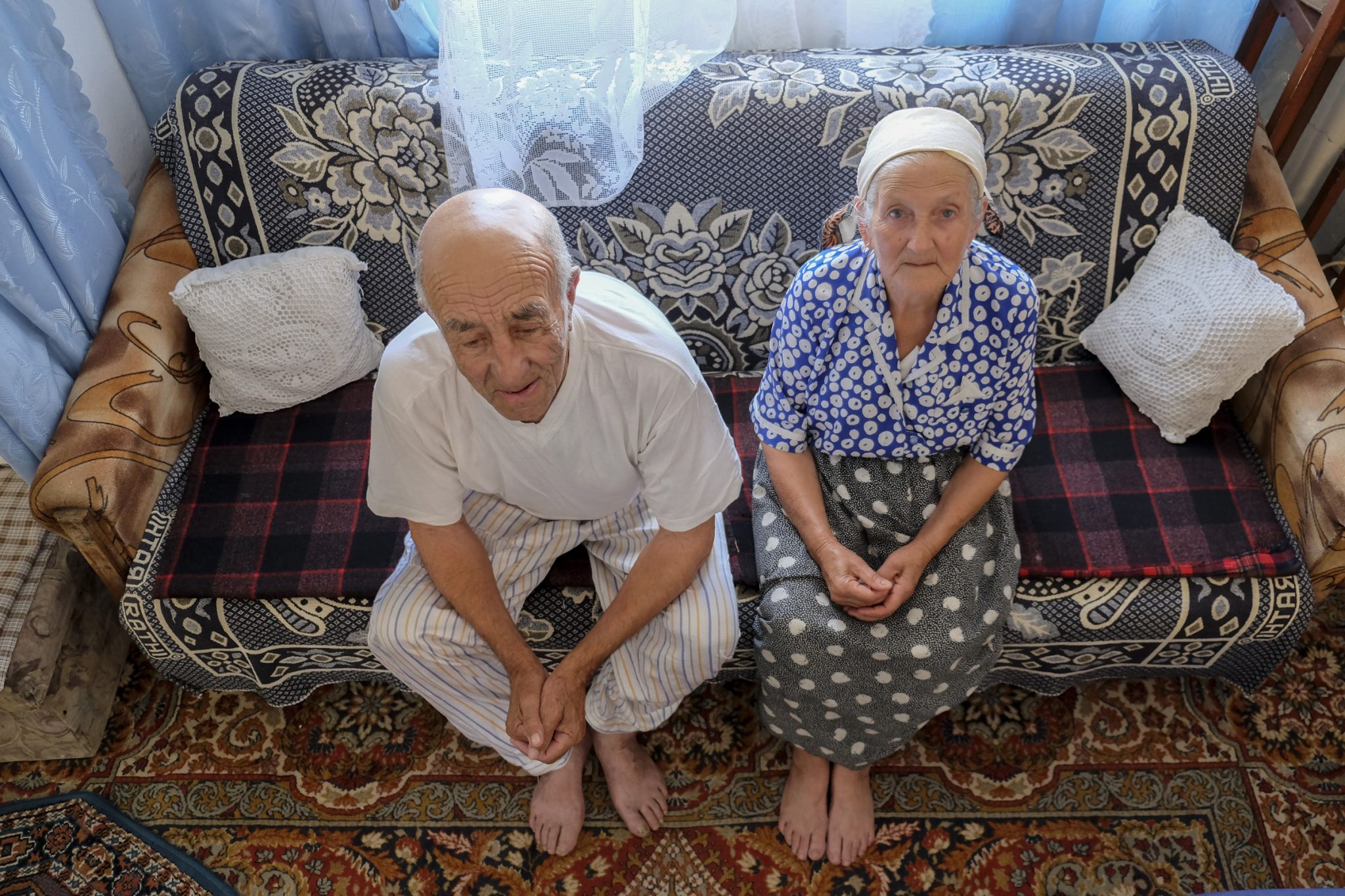
The Čengalović Family: Hatka (77) and Sakib “Dedo” (81), Farmers
Hatka: “I have been living in this village my whole life. I was born here and I will die here. We only worked around and lived off of the land and the livestock. We always had land and on it, we planted many different crops—from maize to potatoes. We had to work from morning until evening, but when you know how to sow, you can have your own corn, potatoes, and fruits. Dedo and I always used to prepare food for the winter. We would stock up on fruits and vegetables and our children would help us prepare everything so that we never had to rely on someone else to give us food. We also always had animals. We had sheep, goats, chicken, and ducks. The animals were hard work, but the result is that we had our own meat and eggs. It was not difficult for me to work and raise children at the same time. Dedo was also a hard worker. He worked as a bricklayer for 38 years and received his pension from that work. I stayed at home to raise my children and teach them skills and a good work ethic so they could help me. I had four good children. All of them got married except for Džemil. My Džemil remained with Dedo and me until April of 1993. He had been working as a waiter and he was a hard worker. I was hoping he would soon get married and start a family. However, instead of his marriage, we had to plan his funeral. He was killed behind our house by a grenade. Here, where the flowers are. It was all so chaotic. I was in the house when the grenade fell. It wounded me and killed him. It also killed all of our livestock; our ducks and chickens. I will never forget the horror, nor will I, as a mother, ever be able to overcome it. Džemil was buried here in the village cemetery. After that, neither Dedo nor I were ever the same. Life did not make sense to us anymore. Losing your child is the hardest thing in the world.”